


Going With the Flow: How SLC is Putting Stormwater to Work
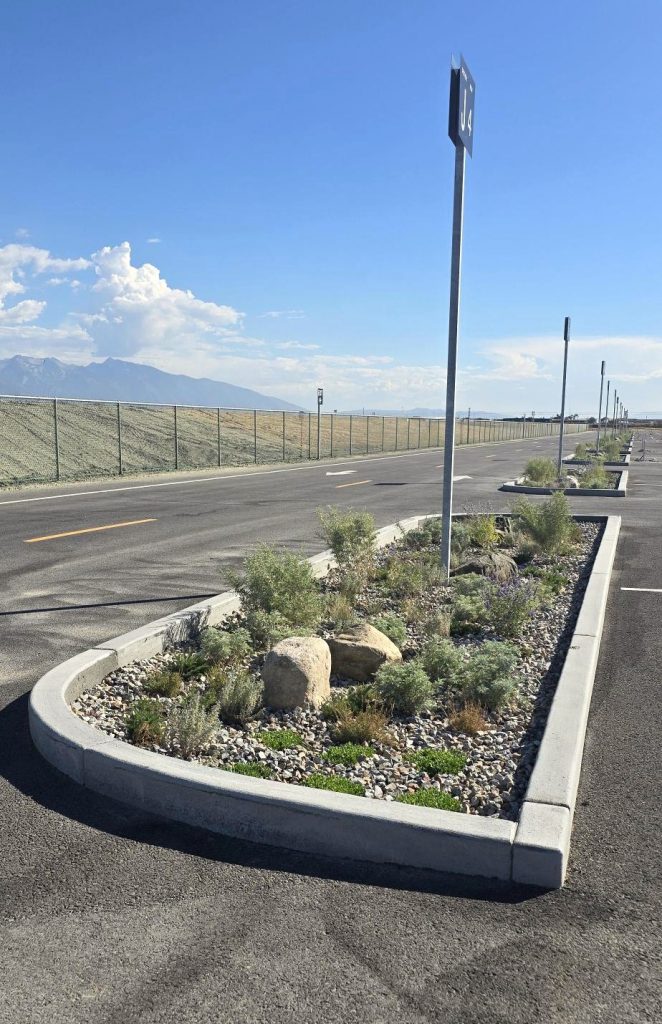
Rain in Salt Lake City’s high desert climate is a welcome occurrence.
Stormwater runoff that sends pollutants into the airport’s nearby wetland ecosystems? Not so much.
Enter the bioswale.
What’s a Bioswale?
At first glance, it looks like any other parking strip: curbing encasing some dirt and landscaping. Beneath all that is a natural filtration system designed to clean and divert stormwater.
“Bioswale is another buffer before stormwater goes into the water table and nearby wetlands,” said Caroline Pinegar, senior project manager for aviation and planning at HTNB, an architectural and infrastructure design firm that works with Salt Lake City International Airport. “Chemicals commonly found in parking lots are caught in the bioswales and naturally filtered out.”
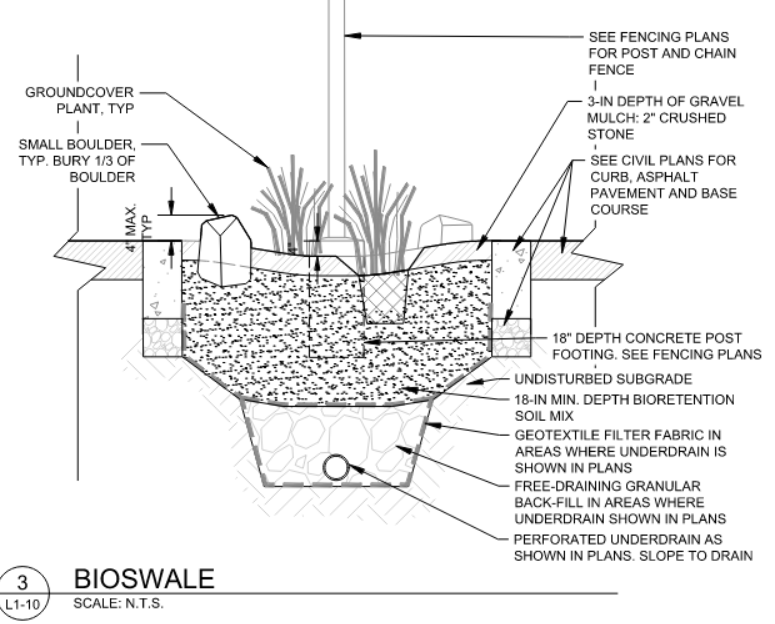
Instead of allowing runoff to flow directly from asphalt into storm drains, bioswales guide it through layers of rock, gravel, soil and specially selected vegetation. Coarser materials help trap debris, while soil and gravel help capture more viscous pollutants.
That’s particularly important at SLC, where extensive paved surfaces, a relatively shallow water table and proximity to migratory wetlands make stormwater management an essential part of airport operations.
“It’s not a flashy sustainability element, but it’s part of everyday infrastructure necessary to the airport,” said Pinegar. “We found a way to make that infrastructure better.”
Finding a Better Way
Bioswales are a new element at SLC, incorporated into the newly-opened Front Nine employee parking lot, located south of the economy parking lot.
These islands weren’t always part of the parking lot plan. The project design was already at about 90% completion when the airport’s project team asked a simple question: Could we do more to protect water quality? The team considered several options, including permeable pavement, which allows water to pass through its surface. But the demands on an airport parking lot, particularly around snow removal, deemed that option impractical.
Bioswales offered a different approach.
By incorporating landscaped collection areas throughout the parking lot, SLC Airport could add natural filtration to its stormwater management system without compromising the lot’s primary purpose: providing much-needed employee parking.
Bioswales also help to slow runoff, reduce the amount of water flowing directly into drains and limit erosion. During storms, these multiple collection points also help manage water pooling.
“It’s also a way to break up the sea of black,” said Juan Martinez, airport environmental and sustainability coordinator. “At the end of the day, we have to incorporate stormwater runoff into our designs. This shows our proactive approach to build in sustainability as well.”
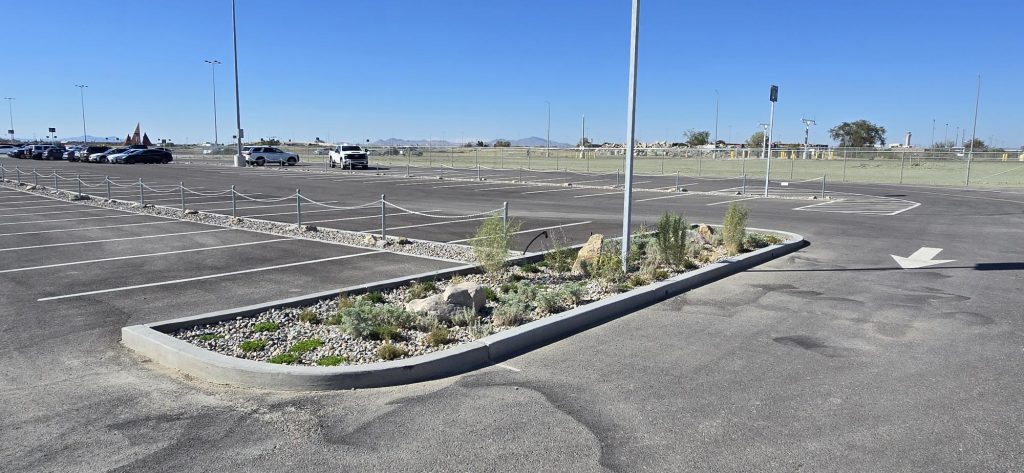
The bioswale does not have irrigation lines, so the plants selected are drought tolerant, maintain a smaller size and have a tolerance for salt, such as ice plant.
Thoughts to the Future
The bioswales are just one part of a larger project designed to address growing parking demand at SLC.
Completion of the Front Nine lot is part of a phased project to increase parking options with sustainable features.
To learn more, including project updates, visit the SLC website at slcairport.com.