


A Tale of Two Flight Paths | Preventing Bird Strikes at SLC
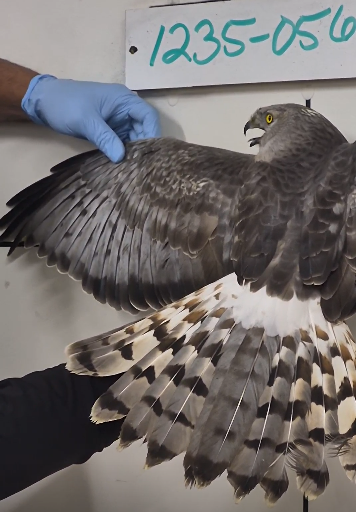
Visitors walking into the wildlife mitigation workshop at Salt Lake City International Airport would have no idea there are two northern harriers hanging out, waiting to be released back into the wild.
The room is still and quiet. Nondescript white boxes line the shelves against the wall.
It’s here that Ron Smith, a member of the airport operations wildlife team, throws on a large pair of gloves before opening one of the boxes.
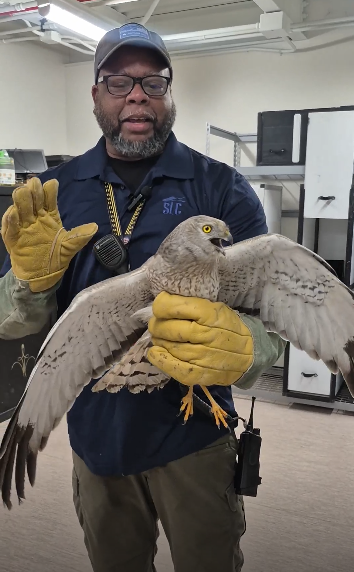
“The claws are pretty sharp,” he explains. “They can make you regret taking liberties.”
Carefully, Smith opens the box and gently grabs the young male northern harrier by the feet. The harrier is one of two captured by the SLC wildlife team this week in February. The bird’s gold eyes flash, its beak open. It is clearly annoyed.
It’s for the animal’s safety, and the thousands of passengers flying through SLC every day, that this feathered friend finds himself temporarily caged.
“These guys can actually cause a lot of damage,” says Smith. “It can damage an engine; it can alter flights to the point where a plane can’t land or even take off because a bunch of them are in the flight path.”
The harrier is one of the smaller raptors seen on the vast footprint of SLC’s acreage.
Falcons, hawks and eagles are known to stop by looking for rodents and smaller birds to eat. A pit stop for these birds isn’t a problem; it’s when they decide to make SLC home that the wildlife team takes action.
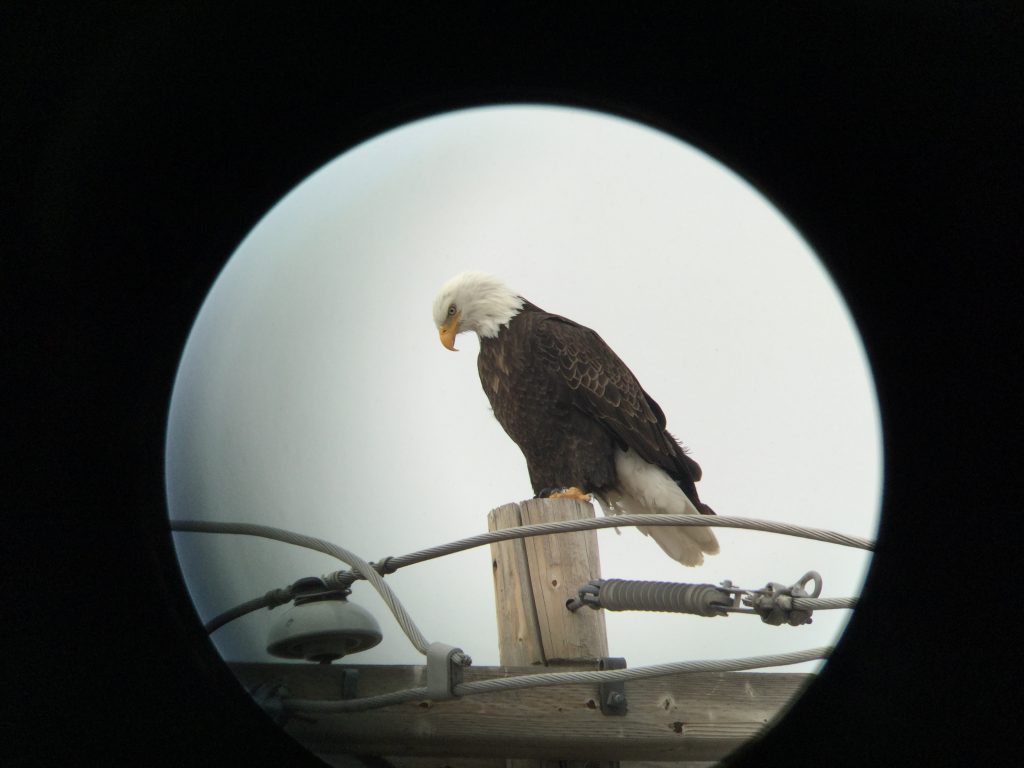
During the winter months, this becomes more complicated when America’s national bird, the bald eagle, migrates to the waterways that surround the airport, hunting ducks. Due to the bird’s size and how high they soar, they can be a problem for aircraft.
“Whenever anybody disturbs [the eagles], they all take off and fly across the whole airport at a high altitude,” Smith explains. “We can also see them land on the airfield, too.”
Because bald eagles have a protected status, SLC must obtain a permit every year to temporarily trap and relocate bald eagles during the winter. Trapping them, however, takes some ingenuity.
In the wildlife workshop, the crew teams up with a biologist to study the most practical ways to capture nuisance raptors and determine innovative ways to trap the birds.
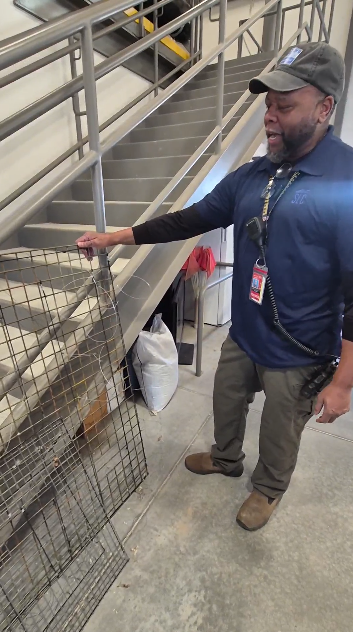
A bald eagle has only been captured and relocated at SLC once. Due to the birds’ size and intellect, effectively trapping them can be difficult.
When a bald eagle is captured, the wildlife team has a 24-hour window to log the bird’s measurements, band it, photograph it and relocate it miles away from the airport once all state and federal regulations are met. Where the bird is released depends on the season and its migration path.
“In the spring, the birds are going north,” Smith explains. “We don’t want to take them south because they’re just going to come back this way.”
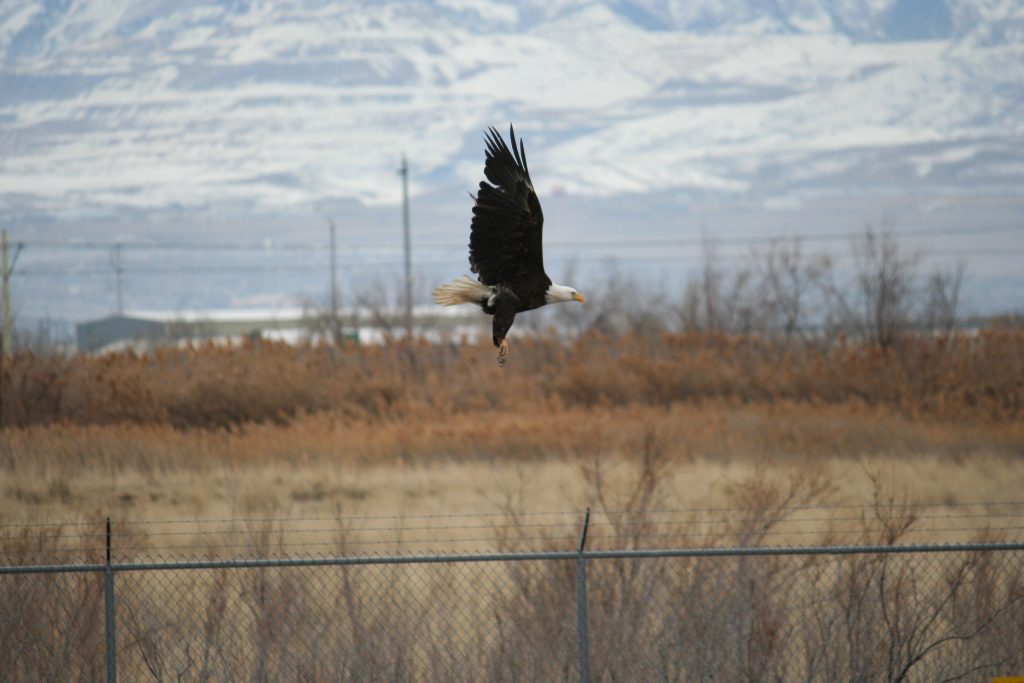
The airport wildlife mitigation team’s mission impacts both bird and plane flight paths, with goals that are not mutually exclusive.
“The airport’s mindset is that we want to go ahead and use the conservation approach, the science approach,” Smith explains. “Ultimately, it is the protection of human life. That’s the first and foremost and everything else falls under that.”